At the heart of industry
Exploring manufacturing and industrial innovation

Industrial mechanics
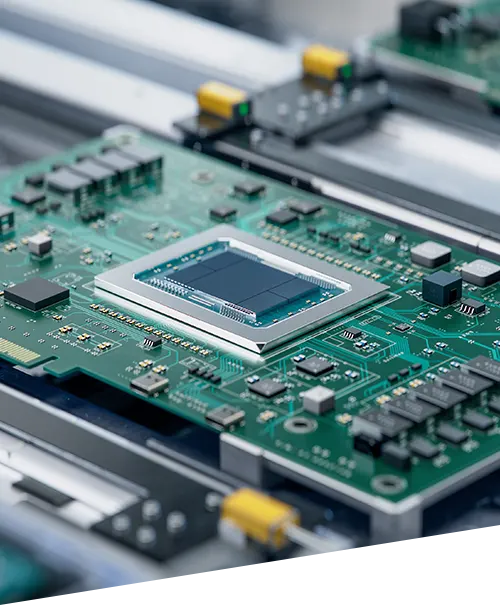
PCB assembly
Printed circuit boards and technical parts

PCB assembly at icape-group.com involves mounting electronic components onto a substrate with insulating and conductive layers to create functional electronic assemblies.

A printed circuit board provides the electrical connections between electronic components.
The resulting electronic circuit integrates multiple components and conductive pathways into a functional assembly.
Single-sided, double-sided and multilayer PCBs are common printed circuit board configurations, distinguished by the number of conductive layers they contain.
Industry in action
Industrial sectors and technological developments
Industrial companies develop goods and services designed to meet customer expectations while improving production quality and operational efficiency. Investment in research and development supports industrial innovation, while digital technologies enable the modernization of manufacturing processes. Industrial digitalization and robotization are part of this transformation. Explore further industry developments on industrysurvey.net.


Automotive and aeronautics
The automotive and aeronautics industries are continuously evolving as technological innovation drives advances in vehicle design, manufacturing processes and production efficiency.


Building and construction
The building and construction industry is undergoing a transformation as bio-based construction materials offer alternatives to conventional building products and support more sustainable construction practices.

Electrical and electronic equipment
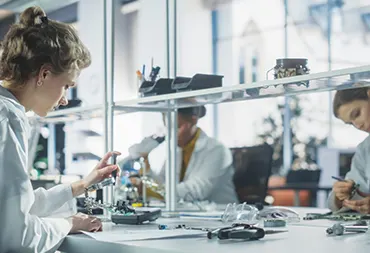
Electrical and electronic equipment manufacturing combines component design, electrical engineering and industrial production techniques to create devices for a wide range of applications.
Technological change in the energy sector
The energy sector must respond to technological advances and regulatory requirements while adapting to changing consumer expectations. Energy consumers are also taking a more active role in monitoring and managing their electricity consumption.
The energy industry offers growth opportunities through renewable energy development and digital transformation. The ecological transition also encourages companies to explore new energy business models that respond to changing market needs.
Smart data
Smart data for industrial decision-making
Smart data focuses on selecting and processing relevant information to produce reliable business insights. Through data analysis and information processing, companies can transform raw data into actionable intelligence that supports business decision-making. Unlike big data, which emphasizes large and complex datasets, smart data prioritizes the usefulness and relevance of the information extracted.


Industry of the future
Emerging industrial markets and future technologies
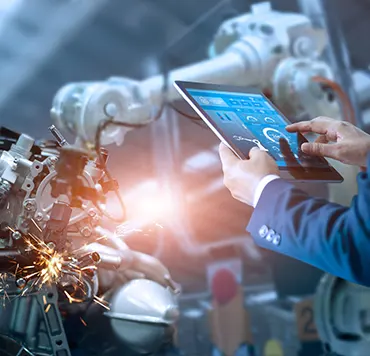
The industry of the future is evolving as artificial intelligence creates new opportunities for industrial automation. Emerging industrial markets increasingly explore AI-powered systems and collaborative robots that can work alongside human operators.

Environmental sustainability is becoming an important consideration in emerging industrial markets.
Industrial companies are adopting environmentally friendly technologies to improve resource efficiency and reduce the environmental impact of their operations.
Industrial startups and emerging business innovations
Startups generally operate with more flexible organizational structures than established corporations, allowing them to adapt their products and business strategies in response to market feedback.
Fintech startups are transforming financial services through mobile payment applications and digital payment solutions that challenge traditional banking and transaction models.

Blockchain technology across industrial sectors
Blockchain technology provides the distributed ledger infrastructure used by many cryptocurrencies, but its applications extend beyond digital currencies. In financial services, blockchain-based systems can support international transactions by simplifying certain verification and settlement processes. Depending on their implementation, these systems may reduce processing costs and improve transaction transparency.
Blockchain systems can reduce reliance on some intermediaries and enable faster transfers in suitable applications, although network and service fees may still apply. Their records can improve transaction traceability, but they do not eliminate cybersecurity risks. In healthcare, blockchain-based solutions may support medical data management by recording access permissions and facilitating the secure sharing of healthcare information when combined with appropriate privacy safeguards.
Innovation in food industry manufacturing
Industrial sectors
Key sectors shaping tomorrow’s industry

Health and biotechnologies
Robotics and automation